
Pacemaker in Los Angeles
A small device that keeps your heart from beating too slowly, implanted and checked over the years by the same electrophysiologist.
Why people choose a pacemaker
Dizziness or fainting spells
Unusual tiredness or weakness
Short of breath with activity
A heart rate too slow
When a slow heartbeat is causing these symptoms and has no reversible cause, a pacemaker may restore a steady rate.


Your pacemaker doctor today and for years ahead
A pacemaker is a long relationship. The electrophysiologist who decides with you that you need one implants it and continues to review your device checks over time.
- Fellowship-trained in cardiac electrophysiology
- Clear explanation of why a device is needed
- Ongoing device checks with the same physician
How a pacemaker implant works
Confirming a slow rhythm
ECGs and monitors show whether a slow or paused heartbeat explains your symptoms.
Choosing the right device
We discuss single, dual chamber or leadless pacemakers based on your rhythm and health.
The implant
Under local numbing and sedation, the device is placed below the collarbone or inside the heart.
Checks and remote monitoring
Your device sends regular reports, and your physician reviews them at follow-up visits.
A pacemaker may be a good fit if
- A slow heartbeat is causing your symptoms
- You have heart block on an ECG
- Your heart pauses for long stretches
Other options we’ll discuss
Understanding pacemakers
When the heart beats too slowly
Your heartbeat starts in a natural pacemaker called the sinus node, and the signal passes through the AV node to the lower chambers. If the sinus node slows down or pauses, or if the signal is blocked on its way, the heart can beat too slowly to meet your body’s needs.
Common causes include sick sinus syndrome and heart block. Age-related wear on the heart’s wiring is a frequent reason. Our page on bradycardia explains slow heart rates in more detail.
Checking for reversible causes first
A slow heart rate is not always a problem. Fit people and sleeping hearts often run slowly. Before recommending a pacemaker, your physician looks for causes that can be corrected, such as some medicines, thyroid problems or electrolyte imbalances. Talk to your physician before changing any medicine.
A pacemaker is usually recommended when a slow rhythm clearly explains your symptoms, or when certain types of heart block are found even without symptoms.
Sometimes the slow rhythm comes and goes, so a single ECG looks normal. In that case your physician may suggest a wearable monitor or an implantable loop recorder to capture what happens when you feel dizzy or faint. Matching symptoms to a recording is the clearest way to know a pacemaker will help.
How a pacemaker works
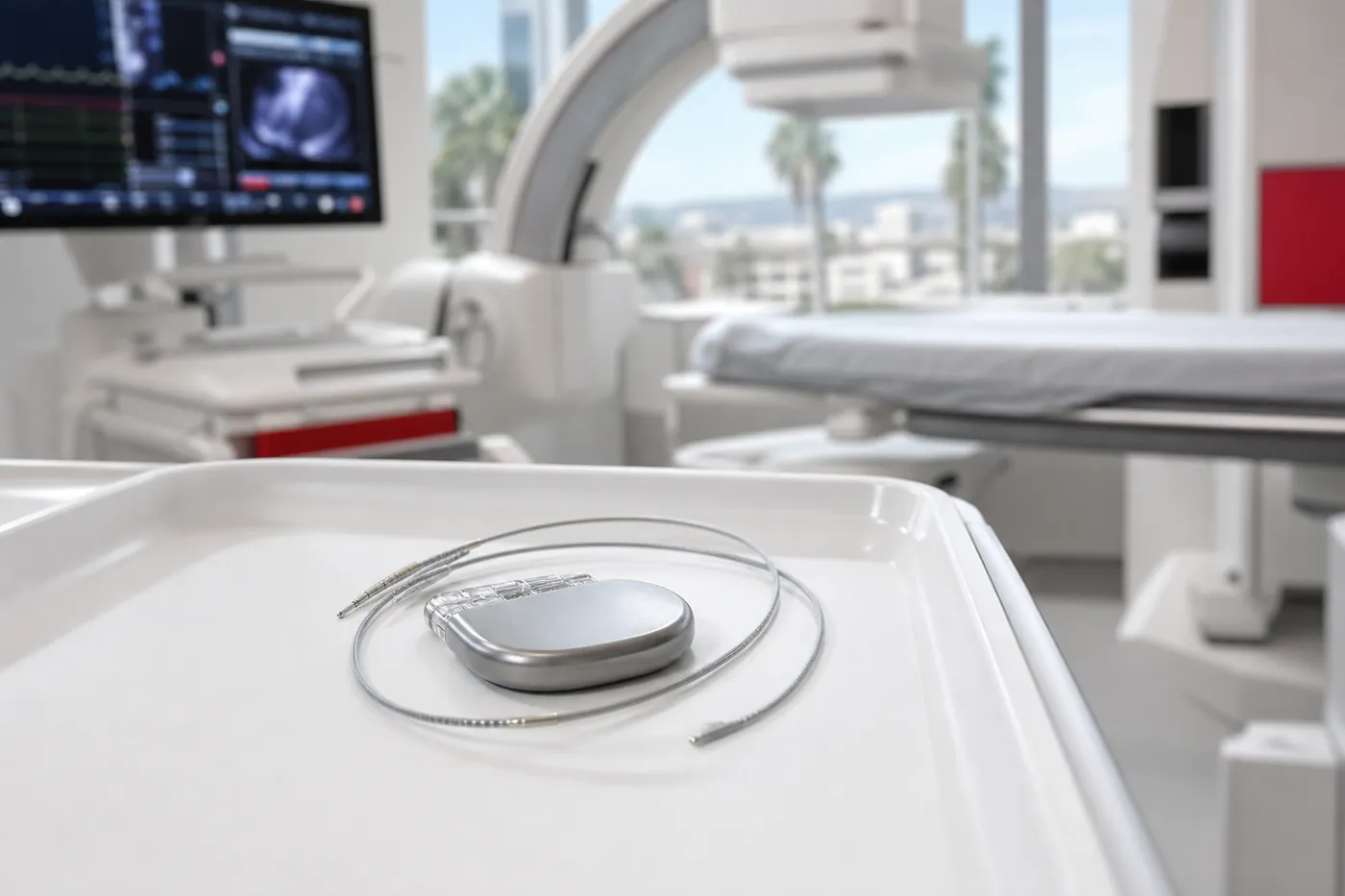
A traditional pacemaker has two parts: a small generator containing the battery and computer, and one or more thin wires called leads. The leads sit inside the heart and sense each beat. If the heart rate drops too low, the pacemaker sends a tiny electrical pulse that you usually cannot feel.
A leadless pacemaker is a single small capsule placed inside the heart through a leg vein, with no wire and no chest pocket. It suits some people but not all. Your physician will explain which design fits your rhythm.
A dual chamber pacemaker uses one lead in the upper chamber and one in the lower chamber, so the two can work in step. A single chamber pacemaker uses one lead and may suit people whose upper chambers are in permanent atrial fibrillation. Your pacemaker is programmed to your needs, and many can raise your heart rate when you walk or climb stairs.
The implant procedure
For a traditional pacemaker, you receive sedation and numbing medicine below the collarbone. Your electrophysiologist makes a small incision, guides the leads through a vein into the heart using X-ray, then connects them to the generator, which sits in a pocket under the skin.
Some people go home the same day, and others stay one night. You may be asked to limit lifting your arm on the device side for a few weeks so the leads can settle.
Keep the incision clean and dry as instructed, and avoid soaking it in a bath or pool until your care team says it has healed. A small bump under the skin is normal. Your physician will tell you when you can drive again.
Daily life with a pacemaker
Most people return to normal routines, including walking, travel and many sports, once healed. Household appliances are generally safe. Keep phones and magnets away from the device, as explained in our guide on phones, magnets and heart devices.
Many modern pacemakers can be used with MRI under specific conditions. Read more in living with a pacemaker.
Carry your device card with you. Show it at airport security and tell any doctor, dentist or therapist that you have a pacemaker before a procedure.
Follow-up and battery life
Your pacemaker is checked in the office and through remote monitoring from home. These checks show battery life, lead function and any rhythm events. Batteries usually last many years, and replacement is a shorter procedure that swaps only the generator.
Risks
Pacemaker implantation is a common procedure. Possible problems include bruising or bleeding at the pocket, infection, a lead moving out of place and, rarely, a collapsed lung or injury to the heart. Your physician explains these before you decide and watches for them at follow-up. Call your care team promptly if you notice redness, warmth or swelling at the device site, since early attention to infection matters.
Questions about pacemakers
Is a pacemaker implant major surgery?
No. It is a minimally invasive procedure done with numbing medicine and sedation, not open-heart surgery. Most people are up and walking the same day.
Will I feel the pacemaker working?
Most people do not feel the pacing pulses. You may notice the device under the skin, especially early on. If you feel unusual twitching or hiccups, tell your care team so they can check the settings.
How long does a pacemaker battery last?
Batteries usually last many years, depending on how often the device paces and its settings. Your remote checks track battery life, so a replacement can be planned well ahead. Our battery replacement guide explains the process.
Can I exercise with a pacemaker?
Yes, for most people, once the incision has healed and your physician agrees. Avoid heavy arm movements on the device side for the first few weeks. Our guide on exercise with a pacemaker has practical tips.
When should I call for help?
Contact your care team about redness, swelling or drainage at the incision, or a fever. Call 911 for fainting, chest pain or severe shortness of breath.