
Atrial Flutter Ablation in Los Angeles
A catheter procedure that interrupts the electrical loop behind atrial flutter, with the same electrophysiologist from your first visit to your last check.
Why people choose atrial flutter ablation
A fast, steady pounding heartbeat
Breathlessness on light effort
Tiredness that limits your day
Medicines that fall short
Because flutter usually follows one predictable path, ablation is often considered early, and your physician will explain whether it suits you.


One electrophysiologist for your whole flutter care
The physician who reviews your ECG and explains your options is the one who performs your ablation. You also see the same doctor at every follow-up visit.
- Fellowship-trained in cardiac electrophysiology
- Clear explanation of your rhythm before any decision
- Follow-up and rhythm checks with the same physician
How atrial flutter ablation works
Consultation and ECG review
We confirm flutter on your ECG or monitor and talk through medicine, cardioversion and ablation.
Finding the circuit
Catheters record signals inside the heart to trace the loop the flutter travels around.
Creating a line of block
Energy makes a thin line of scar across the circuit so the signal can no longer loop.
Testing and follow-up
Your physician tests that the line holds, then checks your rhythm at follow-up visits.
Atrial flutter ablation may be a good fit if
- You have typical flutter confirmed on an ECG
- Flutter has returned after cardioversion or medicine
- You would rather avoid long-term rhythm medicines
Other options we’ll discuss
Understanding atrial flutter ablation
What atrial flutter is
In atrial flutter, an electrical signal gets caught in a loop inside the upper chambers of the heart (the atria). Instead of firing once per heartbeat, it races around the same track over and over.
The atria then beat very fast. The lower chambers usually follow every second or third signal, so your pulse may feel fast but fairly regular. That is one way flutter differs from atrial fibrillation, where the beat is irregular.
Typical and atypical flutter
In typical flutter, the loop runs around the tricuspid valve in the right atrium. It passes through a narrow strip of tissue called the cavotricuspid isthmus. Blocking that one strip breaks the loop, which is why ablation for typical flutter is usually a focused, well-defined procedure.
Atypical flutter follows a different path, often in the left atrium. It is more common in people who have had heart surgery or an earlier ablation. Finding the circuit takes more detailed mapping, and your physician will explain how that changes the plan.
Ablation, medicine or cardioversion
Medicines can slow the heart rate during flutter, but they often have a harder time keeping flutter away than they do with some other rhythms. A cardioversion, a brief, timed shock given under sedation, can reset the rhythm quickly, yet flutter often returns afterward.
Because typical flutter follows one known path, ablation is often discussed early rather than as a last resort. That does not mean everyone needs it. Your age, other health conditions, how you feel in flutter and your own preferences all shape the plan, and you will have time to ask questions before deciding.
What happens during the procedure
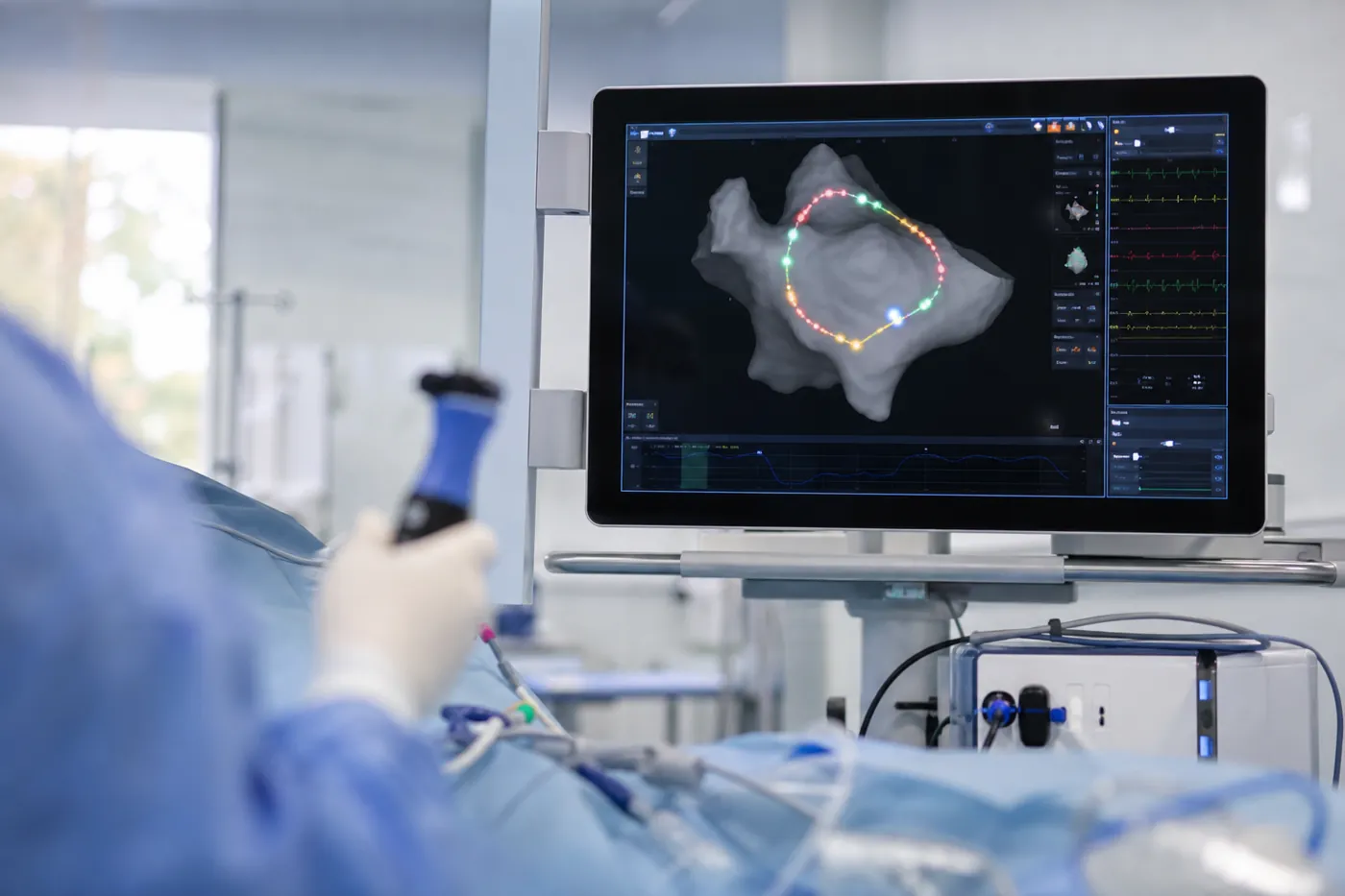
The ablation is done in the electrophysiology lab, usually under sedation. Thin catheters are passed through a vein at the top of the leg and guided into the heart. There are no incisions in the chest.
Your electrophysiologist confirms the flutter circuit, then applies energy along the isthmus to make a thin line of scar. Afterward the line is tested with pacing to make sure signals can no longer cross it. Many people go home the same day or the next morning.
Before and after your ablation
Before the ablation you may have an echocardiogram, blood tests and a review of your medicines. You will get written instructions about fasting and about which medicines to take or pause, including any blood thinner. Talk to your physician before changing any medicine on your own.
Bring a list of your medicines and any recordings from a home monitor or smartwatch. Plan for someone to drive you home and to stay with you for the first night if you leave the same day.
Expect to feel tired for a day or two. Some soreness or bruising where the catheter went in is common and usually fades over a week or two. Your physician will tell you when you can drive, lift and return to exercise.
Call your care team if the leg puncture site swells, bleeds or becomes very painful. Call 911 for chest pain, fainting or severe shortness of breath.
Flutter, AFib and blood thinners
Atrial flutter and atrial fibrillation often travel together. Some people with flutter later develop AFib, even after a successful flutter ablation. Your follow-up visits include rhythm checks so any new pattern is found early.
Flutter can raise stroke risk in a similar way to AFib. Whether you stay on a blood thinner after ablation depends on your overall stroke risk, not only on your rhythm. Your physician makes that decision with you. You can read more in our guide on AFib and stroke risk.
Risks
Flutter ablation is a common, well-established procedure. The most frequent problems are bruising or bleeding at the catheter site. Rarer risks include damage to the heart or blood vessels and an unintended effect on the heart’s normal electrical system. Your physician reviews your own risks and benefits before you decide.
Questions about atrial flutter ablation
Is atrial flutter ablation painful?
You receive sedation and numbing medicine at the catheter site, so most people feel little during the procedure. Afterward, mild soreness in the groin and some chest discomfort for a day or two can occur. Tell your care team about any pain that worries you.
How long does the procedure take?
Typical flutter ablation is often shorter than an AFib ablation, but timing varies with your anatomy and the type of flutter. Atypical flutter usually takes longer because more mapping is needed. Your physician will give you an estimate for your own procedure.
Will I need to stay in the hospital?
Many people go home the same day or the next morning. The plan depends on your health, the type of sedation used and how you feel after the procedure.
Can atrial flutter come back after ablation?
For typical flutter, the line of block is often long-lasting, but no procedure can promise the rhythm never returns. Some people go on to develop atrial fibrillation, which is a separate rhythm. Follow-up monitoring helps your physician spot either one early.
Should I see an electrophysiologist for flutter?
An electrophysiologist specializes in heart rhythm problems and performs ablations. If you have been told you have flutter, a consultation can help you understand all of your options. Our guide on when to see an electrophysiologist explains more.