
AFib Ablation in Los Angeles
A minimally invasive procedure to calm an irregular heartbeat, planned and performed by your own electrophysiologist.

What AFib can feel like
Racing or fluttering heartbeat
Tiredness and shortness of breath
Dizziness or lightheadedness
A higher risk of stroke
If medication has not controlled your symptoms, ablation may be the next step.
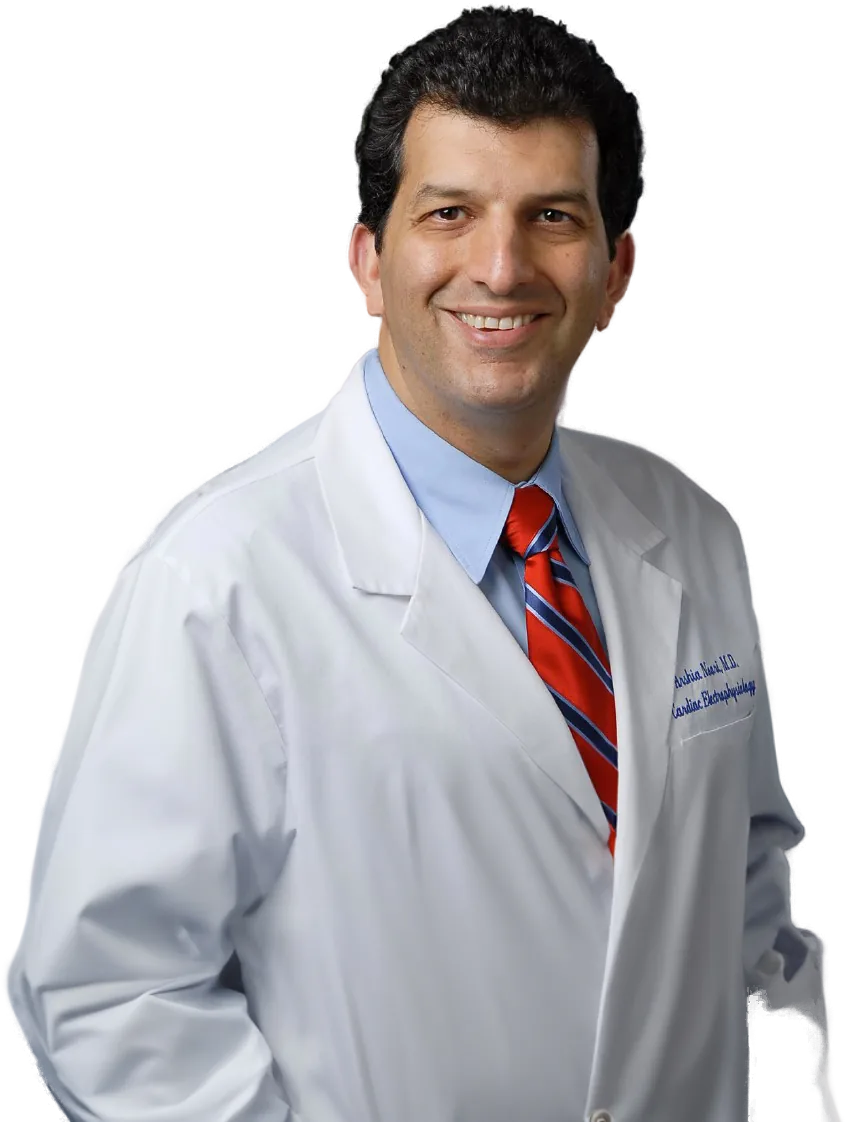

Your ablation, start to finish, with your own doctor
The electrophysiologist who meets you at your consultation is the one who performs your ablation and reviews your follow-up.
- Fellowship-trained in cardiac electrophysiology
- Explains every option before any procedure
- Follow-up with the same physician
How AFib ablation works
Consultation and testing
We review your history and tests, confirm AFib and talk through every option.
Mapping your heart’s electrical signals
Thin catheters build a detailed 3D map that shows where the faulty signals start.
The ablation
Targeted energy creates tiny areas of scar that block those signals.
Recovery and follow-up
Most patients go home the same day or the next, then follow up with their own doctor.
Ablation may be a good fit if
- Your AFib keeps coming back
- Medication isn’t working or causes side effects
- You want fewer symptoms day to day
Other options we’ll discuss
Understanding AFib ablation
What happens in atrial fibrillation
In atrial fibrillation, the upper chambers of the heart (the atria) receive chaotic electrical signals instead of one steady beat. The atria quiver rather than squeeze, and the heartbeat can become fast and irregular.
In many people these signals start in the pulmonary veins, where they join the left atrium. That is why most AFib ablations focus on electrically isolating those veins.
How the procedure is done
An ablation is done in the electrophysiology lab, usually under sedation or general anesthesia. Thin, flexible catheters are passed through a vein at the top of the leg and guided into the heart. There is no open-chest surgery.
Your electrophysiologist builds a 3D map of your heart’s electrical activity, then applies energy at precise points. Depending on your heart, this may be heat (radiofrequency), cold (cryoablation) or pulsed field energy. The small lines of scar it leaves block the faulty signals from spreading.
Preparing for your ablation
Before the procedure you may have imaging of the heart and blood tests. You will get clear instructions about eating, drinking and which medicines to take or pause, including blood thinners. Plan for someone to drive you home.
After the procedure
Most people go home the same day or the next morning. It is normal to feel tired for a few days and to have some bruising where the catheters went in. Many people return to light activity within a few days, and your physician will tell you when you can lift, drive and exercise.
It can take a few months for the heart to settle after an ablation, so some extra beats early on do not mean the procedure failed. Your follow-up visits and rhythm monitoring show how well it is working.
Risks
Catheter ablation is a well-established procedure, but like any procedure it has risks. The most common are bruising or bleeding where the catheters went in. Rarer complications include damage to the heart or nearby structures, and stroke. Your physician reviews your own risks and benefits with you before you decide.
Questions about AFib ablation
Is AFib ablation safe?
Catheter ablation is a well-established procedure that electrophysiologists perform routinely. As with any procedure there are risks, most often bruising or bleeding at the catheter site and, rarely, more serious complications. Your physician reviews your personal risks and benefits with you before you decide.
How long does an ablation take?
Most AFib ablations take a few hours, including preparation in the lab. Your physician will give you a time estimate for your own procedure.
When can I go back to work?
Many people return to desk work within a few days to a week. Avoid heavy lifting and strenuous exercise until your physician says it is safe, usually after about a week.
Will I still need blood thinners?
Most patients stay on blood thinners for at least a few months after an ablation. Whether you can stop long term depends on your overall stroke risk, not only on your rhythm, so your physician decides this with you.